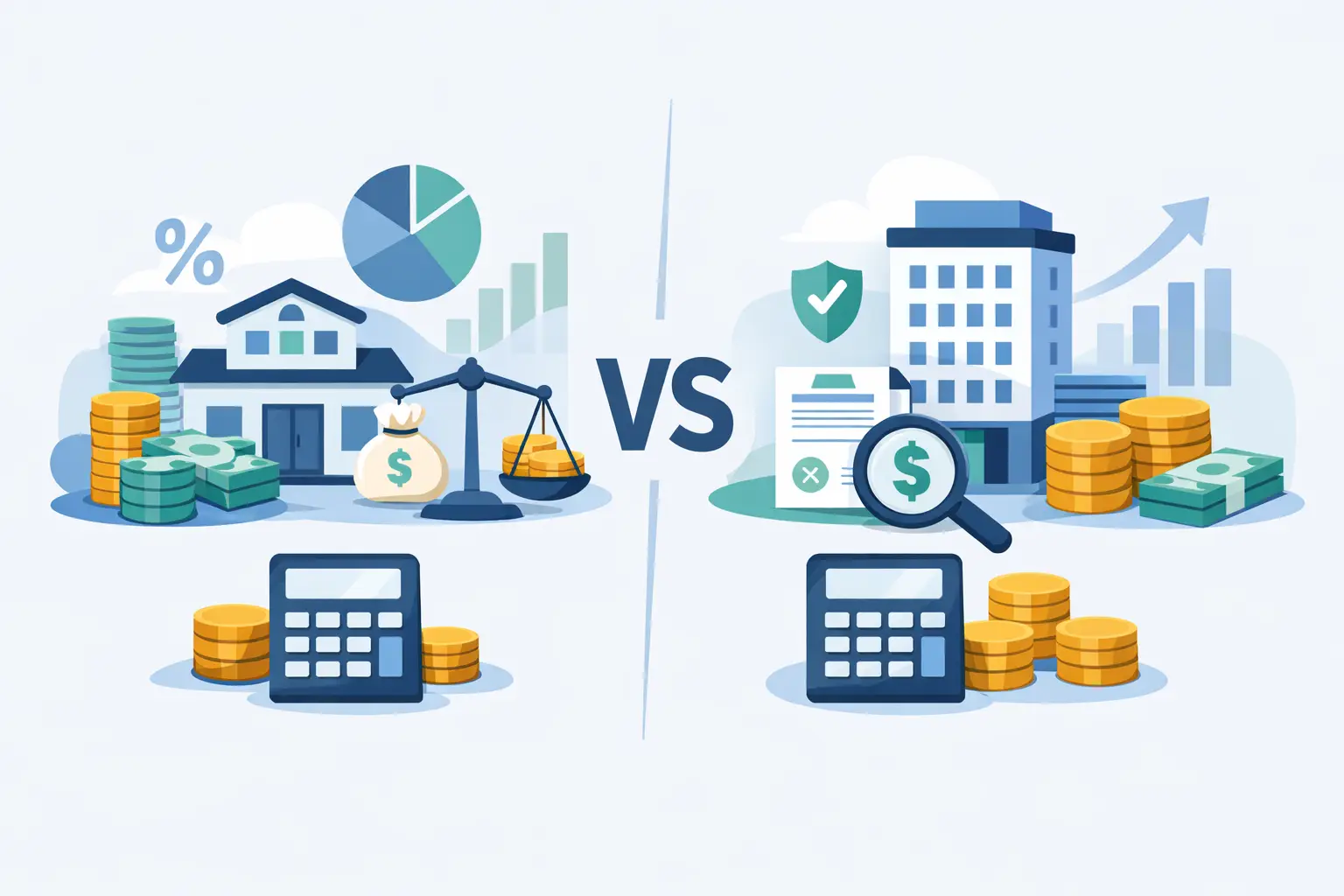
A profitable business can create a frustrating tax question: why does more income sometimes mean a much larger self-employment tax bill? For many owners, the discussion of LLC vs S corp tax benefits begins there. The answer is not that one entity is always better. It is about matching your tax treatment, payroll practices, profit level, and administrative capacity to the business you are actually running.
An LLC is a legal entity formed under state law. An S corporation is a federal tax election that an eligible LLC or corporation can make. That distinction matters because an LLC does not have to become a corporation to be taxed as an S corporation. In many cases, an owner forms an LLC for liability and operational flexibility, then elects S corporation tax treatment when the numbers support it.
LLC vs S Corp Tax Benefits: The Core Difference
A single-member LLC is generally taxed as a sole proprietorship by default. Its profit passes through to the owner’s individual tax return and is generally subject to income tax plus self-employment tax. A multi-member LLC is generally taxed as a partnership, with taxable income flowing through to the members.
With S corporation tax treatment, business income also passes through to the owners. The key difference is that an owner who actively works in the business can receive income in two forms: reasonable wages paid through payroll and remaining profit distributions. Wages are subject to payroll taxes. Qualified distributions generally are not subject to self-employment tax or Social Security and Medicare payroll taxes.
This potential split between wages and distributions is the primary tax benefit associated with an S corporation election. It is also the area that receives the most scrutiny when handled poorly.
The self-employment tax consideration
For an LLC taxed as a sole proprietorship, net business profit is generally subject to self-employment tax. That tax covers Social Security and Medicare, in addition to the owner’s regular federal income tax obligation. The calculation has limits and additional rules at higher income levels, but the core issue is simple: the full eligible profit is exposed to self-employment tax.
For an S corporation owner, only W-2 wages are generally subject to payroll taxes. If the business earns enough profit after paying the owner a reasonable salary, the remaining distribution can avoid those employment taxes.
For example, assume a consulting business earns $180,000 before owner compensation. If a supportable market-based salary for the owner’s work is $100,000, the remaining $80,000 may be available as a distribution, subject to cash flow, bookkeeping, and other business needs. That does not make the $80,000 tax-free. It is still generally subject to income tax. However, it may not be subject to payroll taxes, which can create meaningful savings.
The savings are not automatic. A business with modest profit may not produce enough distribution income to outweigh the additional costs of payroll, tax filings, state fees, and professional support.
Reasonable Compensation Is Not Optional
S corporation tax treatment is not a way to pay yourself an artificially low salary and label nearly all business income a distribution. The IRS expects shareholder-employees to receive reasonable compensation for the services they perform.
Reasonable compensation depends on facts, not a single percentage. A CPA will often consider the owner’s duties, experience, hours worked, industry compensation data, location, business revenue, profitability, and what the company would need to pay someone else for comparable work.
A software founder who leads product development, sales, and operations may need a substantially different salary than a real estate investor whose income is primarily derived from rental activity and third-party property management. Similarly, an ecommerce owner who personally manages purchasing, advertising, fulfillment, and customer service has active responsibilities that should be reflected in compensation.
Underpaying wages can lead to reclassified distributions, back payroll taxes, penalties, and interest. The objective is not to minimize salary at all costs. It is to establish a salary that is defensible, documented, and appropriate for the work performed.
Tax Benefits Both Structures May Share
Choosing S corporation tax treatment does not create a separate set of business deductions. Many valuable tax planning opportunities are available to either an LLC or an S corporation, provided the expense is ordinary, necessary, properly documented, and connected to the business.
Both may deduct legitimate operating costs such as software, professional fees, advertising, business insurance, supplies, travel that meets tax requirements, and qualifying home office expenses. Both may also support retirement planning, health insurance strategies, accountable plan reimbursements, and depreciation deductions when structured correctly.
The qualified business income deduction may also be available to eligible owners of both LLCs and S corporations. This deduction can equal up to 20% of qualified business income, although taxable income thresholds, service business rules, wage limits, and property limitations can affect the result. An S corporation election does not automatically increase the deduction and, in some cases, owner wages can reduce qualified business income.
This is why entity selection should be part of a broader tax plan rather than a standalone decision. The employment tax benefit may be real, but it needs to be evaluated alongside deductions, retirement contributions, income projections, and the owner’s personal tax position.
The Added Cost and Compliance of an S Corporation
An LLC taxed by default is often simpler to operate. A single-member LLC may avoid payroll entirely if the owner is not otherwise required to run it. The owner reports business activity on an individual return and makes estimated tax payments as needed.
An S corporation requires more discipline. The business must run payroll for working owners, make timely federal and state payroll tax deposits, file payroll tax returns, prepare W-2s, maintain separate financial records, and file an annual S corporation return. Owners must also respect corporate formalities and keep business and personal finances separate.
The election itself has eligibility rules. Generally, an S corporation must be a domestic eligible entity, have no more than 100 shareholders, issue only one class of stock, and have only permitted shareholders. Certain trusts and estates may qualify, but partnerships, corporations, and nonresident aliens generally cannot be shareholders.
State treatment also deserves attention. Some states impose franchise taxes, entity-level taxes, or separate filing obligations that can reduce the federal tax advantage. A business operating in several states may face additional registrations, payroll filings, and compliance requirements.
For an owner with consistent profits, clean bookkeeping, and a willingness to maintain payroll and compliance systems, these requirements are manageable. For a newer business with uneven revenue or limited profit, they can be an unnecessary burden.
When an LLC May Be the Better Choice
An LLC taxed under its default rules can be a practical choice when the business is just getting started, profits are unpredictable, or the owner expects to reinvest most available cash in operations. It can also be preferable when the projected payroll tax savings are small after accounting for tax preparation, payroll administration, state filings, and advisory costs.
Partnership-taxed LLCs can offer flexibility that S corporations do not always provide, particularly when owners want different economic arrangements, preferred returns, special allocations, or more complex ownership structures. Real estate ventures and investment-focused businesses often need this flexibility.
The LLC structure can also be an effective first step. Owners can establish good books, separate banking, consistent invoicing, and reliable financial reporting before deciding whether an S corporation election will add value.
When an S Corporation Election May Make Sense
S corporation tax treatment is often worth modeling when a business has recurring profit beyond a reasonable owner salary and can support the cost of payroll and compliance. Service businesses with strong margins are common candidates, including consultants, agencies, certain professional practices, SaaS companies, and established ecommerce operations.
The best time to consider the election is before filing deadlines and before the business has created messy books or inconsistent owner payments. Owners should also consider whether profits are stable enough to support a regular payroll schedule. A year with unusually high income is not always a reliable reason to permanently change tax treatment.
A practical analysis should compare projected federal and state taxes under both approaches, estimate a defensible salary, factor in payroll and tax preparation costs, and review ownership eligibility. It should also account for the owner’s retirement goals, health insurance arrangements, estimated taxes, and plans to add partners or investors.
Make the Decision From Clean Numbers
The most useful entity decision starts with current financial statements, not a social media tax tip. If your books do not clearly show revenue, deductible expenses, owner draws, and sustainable profit, any estimate of S corporation savings is likely to be incomplete.
At Net Worth Accountax, we help business owners evaluate entity structure through the same practical lens used for tax planning, payroll, and ongoing bookkeeping: what is compliant, what is supportable, and what will serve the business as it grows. The right answer may be to keep your LLC’s default tax treatment for now, elect S corporation status, or revisit the question after another profitable quarter.
Before making an election, bring together your year-to-date financials, prior tax return, expected annual profit, owner responsibilities, and state filing requirements. A well-timed decision supported by accurate records can protect cash flow while giving you a tax structure that fits the business you are building.

Leave A Comment